That Heart-Dropping Moment on the Interstate
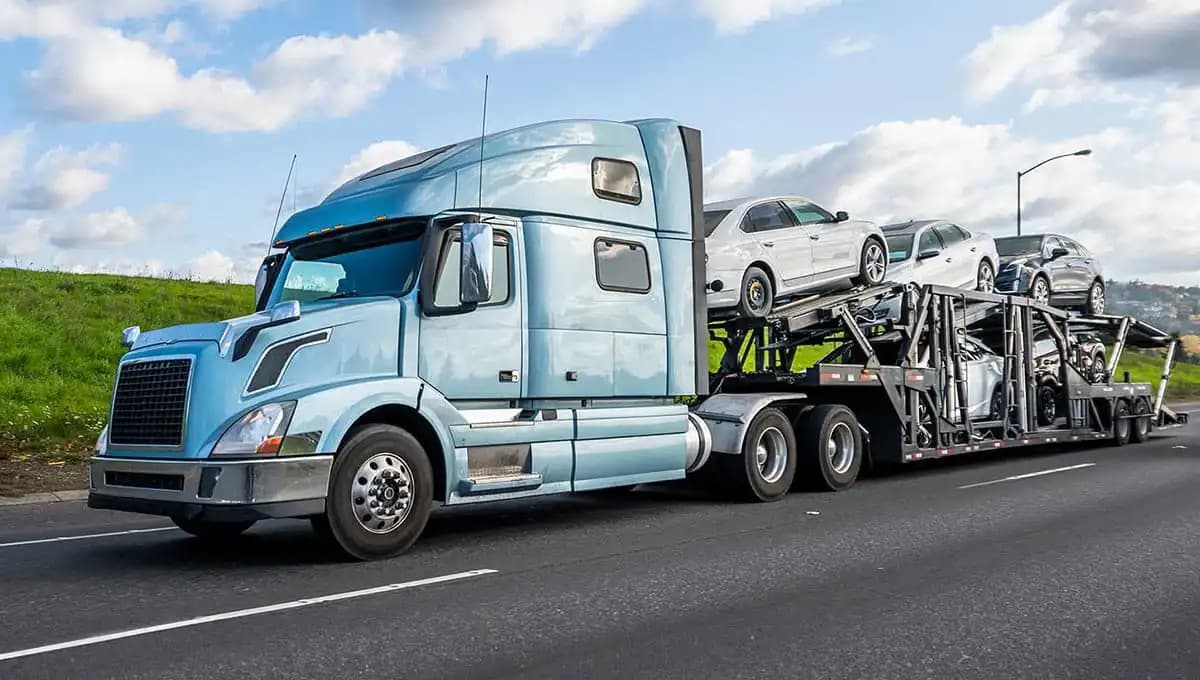
You’re driving, maybe a little bored, when you pass it. A huge, two-level trailer crawling up the hill, loaded with cars. A minivan, a few sedans, a shiny SUV strapped down on top. And for a split second, you imagine your car up there. Exposed. Naked to the world. The idea of Open Carrier Auto Transport can feel like you’re sending your kid to school on the roof of the bus.
On this page
Table of Contents
On this page
Table of Contents
I had the same gut-clench. I was moving my faithful old Honda from Phoenix to Chicago. The quote for an enclosed trailer was more than the car was worth. The open carrier quote felt reasonable, but that image of it rattling through a Missouri thunderstorm kept me up at night. This is the real decision we face: absolute protection at a sky-high price, or the practical, slightly scary choice that lets us afford the move.
Why It’s the Go-To (And It’s Not Just About Price)
Let’s be real. Open Carrier Auto Transport is the backbone of the industry because it works. It’s how dealerships get their new cars. It’s how rental agencies shuffle fleets around. Think of it like the economy class of vehicle shipping. It’s not fancy, but it gets you there.
The drivers of these rigs aren’t joyriders. They’re professionals. They know how to strap down a car so it doesn’t budge an inch. They plan routes to avoid the worst weather when they can. And because there are so many open carriers on the road, you can get your car moving faster. You’re paying for efficiency and a proven system, not for a velvet-lined garage on wheels. For a daily driver, it’s almost always the smartest choice.
The Truth About “The Elements”
Okay, let’s talk about the fear. Rain. Road grime. A rogue pebble. These are real possibilities. But here’s the perspective shift I got from a veteran driver named Frank: “Lady, this car got you through a Phoenix dust storm and six midwestern winters. A three-day rain shower on I-40 ain’t gonna hurt it.”
He was right. My car’s paint was designed to handle sun and rain. A professional wash at my destination took care of the road film. The risk isn’t zero, but it’s the same risk you take driving it yourself across the country, just without the wear on your engine. The trade-off is thousands of dollars in savings and zero miles on your odometer.
When You Should Absolutely Say “No” to Open Air
This is crucial. If you’re moving a car that isn’t just transportation—if it’s a treasure—open transport isn’t for you.
We’re talking about a concours-ready classic with mirror paint. A brand-new, six-figure luxury car where a paint chip is a tragedy. A vintage convertible with an immaculate original top. For these, you bite the bullet and pay for the enclosed trailer. It’s a white-glove, climate-controlled vault. You’re not paying for transport; you’re paying for peace of mind that your investment is cocooned. For the rest of us, with cars that have grocery store parking lot dings already, the open carrier is a practical friend.
How to Actually “Book Auto Transport” Without the Panic
Seeing a low online quote is easy. Actually pulling the trigger is hard. To confidently Book Auto Transport, you have to talk to a human. I called three companies. The first two just emailed me a price. The third, a guy named Leo, asked questions.
“How’s it run? Any leaks? Is your street a tight fit?” He explained that an accurate quote for Open Carrier Auto Transport depends on the details. A non-running car is harder to load. A lifted truck might not fit. His honesty built trust. He didn’t sell me; he consulted with me. That’s who you book with.
Your Homework (It’s Non-Negotiable)
Leo gave me a checklist. This is your power. First, wash your car. A clean car lets you and the driver see every scratch. Then, take pictures. A hundred of them. Every angle, every wheel, the roof. Date-stamp them.
When the driver arrives, you do the “walk-around” together. Point out the dent on the driver’s side door you got at the mall. Make him notate it on the form. This isn’t being annoying; it’s being smart. That signed form is your bible. It says, “This damage was already here.” Do not skip this.
Letting Go and Trusting the Process
The morning the carrier arrived, I felt sick. My Honda looked so small next to that rig. Frank, the driver, handed me the clipboard. We did the walk-around. He noted the rust spot over the rear tire without me saying a word.
Watching him expertly drive my car up the ramp and cinch down the heavy straps was a strange relief. He’d done this ten thousand times. Four days later, he called from a truck stop in Illinois. My car arrived with a layer of dust and a perfect, unchanged dent on the driver’s side door. It was fine. It was home.
Booking that Open Carrier Auto Transport wasn’t about being cheap. It was about being practical. By choosing a reputable partner to Book Auto Transport, doing my homework, and trusting the professionals, I saved a fortune and my car arrived ready for its new life, no drama attached. Sometimes, the standard option is the best one.
Comments
0 comments
No comments yet. Be the first to comment.
Related Articles
Mar 17, 2026
How Can You Manually Download Updates in Sage 50? A Simple Step-by-Step Guide
Understanding how to manually download updates sage 50 is essential for businesses that want to maintain accurate accounting performance, ensure compliance, and access the latest software improvements without relying on automatic updates. Many organizations prefer manual installation to maintain system control, test compatibility, or manage network restrictions. If you require professional assistance while performing the […]